
How Often Should You Change Padel Balls? The Science of Pressure and Bounce


For passionate padel players, there is nothing quite like the crisp sound of a brand-new ball rebounding off the glass. But as any regular player knows, that perfect bounce doesn't last forever. Over time, balls become soft, heavy, and unresponsive.
While players often blame their rackets or their technique for a sluggish game, the culprit is usually ball degradation. Understanding the science of pressure, felt wear, and court interaction is essential for players who want to maintain a high level of play—and for sports club investors looking to optimize their facility's performance and operating budgets.
How often should you change padel balls for optimal play?
For recreational and intermediate players, padel balls should generally be changed every 2 to 3 matches (approximately 4 to 6 hours of play). Beyond this point, the ball loses enough pressure and rebound consistency to noticeably alter the dynamics of the game.
For professional tournaments on the Premier Padel circuit, the requirements are exponentially stricter. Under official International Padel Federation (FIP) regulations, balls are changed after the first 9 games (which accounts for the initial warm-up session) and every 11 games thereafter, as elite athletes demand absolute consistency in ball speed, bounce, and spin.
For club investors, tracking this lifespan is vital. If courts are equipped with low-quality, degraded balls, matches become slower, rallies become shorter, and players are forced to exert more physical effort, which increases the risk of elbow and joint injuries.
What is the science behind padel ball pressure and rebound?
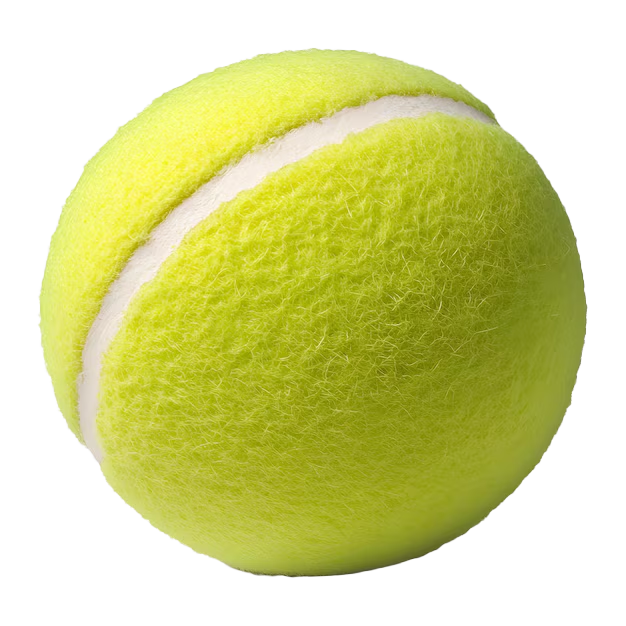
Padel balls are pressurized spheres composed of a hollow rubber core wrapped in synthetic felt. During manufacturing, the core is filled with pressurized gas (usually nitrogen or air) to create an internal pressure of approximately 10 to 11 psi.
This internal pressure is what gives the ball its elastic rebound when it impacts the court surface, the racket, or the glass walls. However, rubber is a porous material. From the moment a can of balls is pressurized and opened, gas molecules slowly but continuously escape through the rubber core. This process, known as gas permeation, occurs even when the balls are not in use.
When a padel ball impacts a racket at high speeds, the compression forces more gas out of the core. As internal pressure drops, the ball loses its "spring" and rebound height decreases. This forces players to hit harder to achieve the same depth, ruining tactical control and slowing down the overall pace of the match.
How can padel club owners reduce ball replacement costs?
For sports club developers and real estate investors in the United States, padel balls represent a significant, recurring operating expense. A busy 8-court club can easily go through hundreds of ball cans every month. To maximize your Return on Investment (ROI), smart operators leverage strategic partnerships starting with Padel One.
By partnering with Padel One, US club owners unlock the ultimate triple-alliance in the sport: you get direct access to world-class court engineering by SkyPadel and the elite retail power of Babolat.
The Babolat Club Agreement via Padel One: When you build your premium facility with Padel One, you gain exclusive access to the prestigious Babolat Club Agreement. Babolat—the global powerhouse in racket sports—selects only premium facilities to receive this commercial sponsorship.
Sponsorship Perks for Investors: This elite contract provides your club with free premium materials—including high-quality Babolat padel balls, professional rackets, apparel, and shoes. It also grants you the license to operate a highly profitable on-site Babolat shop, alongside annual marketing funds to host major tournaments and exhibition matches.
By combining Padel One’s premium, wear-resistant court surfaces with a lucrative Babolat ball sponsorship, US club owners can dramatically slash their monthly operational overhead and maintenance costs. Over a standard 10-year court lifespan, this strategic synergy translates to an estimated €18,000 in net savings per court—keeping your courts active, your players equipped with fresh gear, and your business highly profitable.
The Physics of a Perfect ball Bounce
For both the weekend enthusiast and the club investor, prioritizing top-tier materials is the ultimate rule for success. Playing with fresh, pressurized balls on a court equipped with certified texturized Mondo turf and rounded silica sand ensures that the bounce remains fast, true, and physically forgiving on the joints.
In the padel industry, consistency is everything. By understanding the science of ball pressure and investing in premium structural surfaces, club owners can deliver an elite playing experience that keeps players coming back, match after match.


 Get a Free Quote